


Daily Personal Care for Elderly Loved Ones
- Serenity Springs Senior Living
- May 23
- 6 min read

A missed shower. The same clothes two days in a row. Medication still sitting in the pill box. For many families, these are the first signs that daily personal care for elderly loved ones is becoming harder to manage alone.
This stage can feel emotional because the need is so personal. Bathing, dressing, grooming, toileting, eating, and moving safely through the day are tied to dignity as much as health. When support is thoughtful and consistent, it does more than keep someone clean and comfortable. It can reduce fall risk, prevent skin issues, support nutrition, protect routines, and help an older adult feel more confident in their own body and environment.
What daily personal care for elderly adults really includes
Families sometimes hear the phrase and think it means basic help with hygiene. In practice, it is much broader. Daily personal care usually covers the hands-on support many older adults need with activities of daily living, often called ADLs. That may include bathing, oral care, dressing, grooming, toileting, incontinence care, transferring from bed to chair, mobility support, and mealtime assistance.
The right level of care depends on the person. One senior may only need reminders and standby help before a shower. Another may need full assistance with bathing, dressing, and safe transfers. Someone living with memory loss may still be physically strong but need cueing, redirection, and calm one-on-one support to complete simple routines without distress.
This is why personalized care matters. The question is not just whether help is needed. It is how much, how often, and in what way that help can preserve dignity instead of taking it away.
Why personal care needs often change quickly
A loved one can seem mostly independent one month and suddenly need daily support the next. Sometimes the change follows a hospitalization, a fall, a new diagnosis, or medication adjustments. Other times it happens gradually, especially with arthritis, Parkinson's disease, dementia, weakness, vision loss, or simple exhaustion from living alone.
Families often try to bridge the gap themselves. That instinct comes from love, but it can become unsustainable fast. Morning care before work, help with toileting overnight, meal supervision, laundry, and medication reminders add up. Even when a family caregiver is deeply committed, there may be real limits around physical lifting, clinical judgment, and consistency.
There is also a safety issue that families sometimes underestimate. Personal care tasks are when many falls happen. Bathrooms are slippery. Transfers require timing and body mechanics. Skin changes can be missed. Dehydration and poor appetite often show up quietly. Daily routines reveal small health changes before they become major problems, but only if someone is there to notice.
The link between daily care, dignity, and health
Good care should never feel rushed or impersonal. Older adults are especially vulnerable to feeling embarrassed when they need help with intimate routines. That is why the manner of care matters just as much as the task itself.
A skilled caregiver knows how to offer support while protecting privacy, encouraging participation, and honoring preferences. Maybe your mother prefers to wash at the sink before breakfast instead of showering early. Maybe your father is more cooperative with a male caregiver for shaving and dressing. Maybe a loved one with dementia does better when the same sequence is used every morning. These details are not extras. They are often the difference between resistance and comfort.
There are also clear clinical benefits. Consistent bathing and skin care can lower the risk of irritation, infection, and pressure-related issues. Proper incontinence care helps prevent breakdown and discomfort. Dressing support can improve circulation, warmth, and safety. Supervised mobility and transfers can reduce falls. Assistance at meals can support hydration and nutrition, both of which affect energy, cognition, and healing.
Signs your loved one may need more support
Most families notice patterns before they ask for help. Hygiene may start slipping. Laundry piles up. Body odor or unchanged clothing becomes more common. Bruises appear after unsteady transfers. The bathroom feels unsafe, but the senior insists they are fine.
Sometimes the signs are subtler. A loved one stops going out because getting ready feels too hard. They avoid bathing because they are afraid of falling. They lose weight because cooking and eating alone take too much effort. They become more withdrawn because daily tasks feel frustrating or humiliating.
It also matters when caregiving begins to strain the family system. If a spouse is exhausted, an adult child is losing sleep, or every day starts with a struggle over medications or hygiene, that is a signal too. Waiting for a crisis is common, but it usually makes the transition harder on everyone.
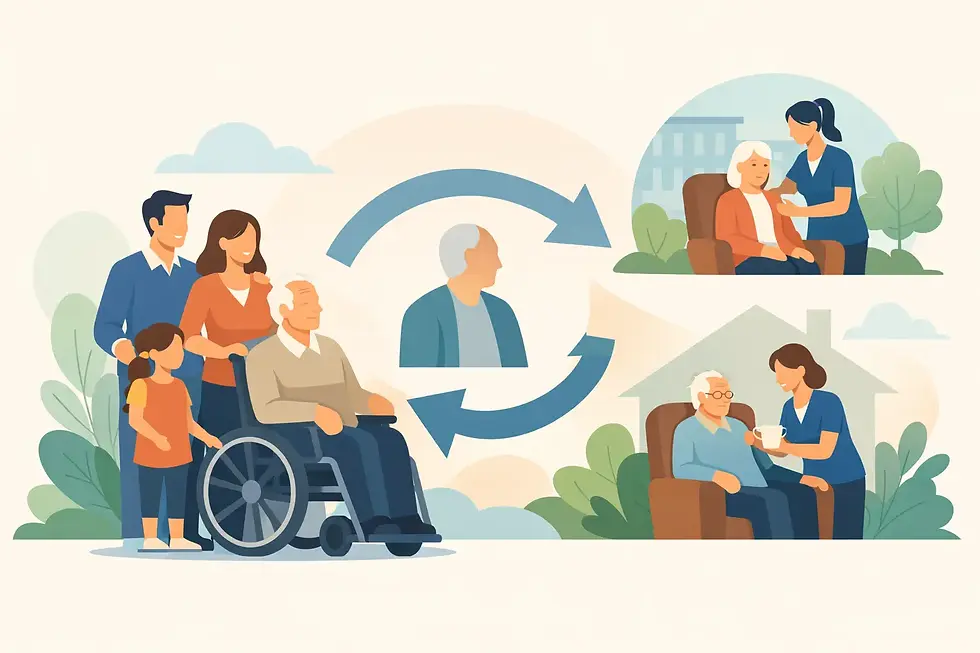
Daily personal care at home versus in a residential care setting
Some older adults do well with personal care support in their own home, especially if needs are limited and family members can fill the gaps. Home-based care may feel familiar and less disruptive at first. It can work well when the environment is safe, the schedule is reliable, and care needs are predictable.
But there are trade-offs. If help is only available for a few hours a day, what happens overnight or during an emergency? If mobility declines, can the home safely support transfers, toileting, and bathing? If memory loss progresses, can supervision keep pace? Families often discover that piecing together care at home becomes more expensive and less dependable than they expected.
A smaller residential care home can offer a different kind of support. Because care is built into the day, residents receive hands-on help consistently, not only during scheduled visits. There is more oversight around medication management, meals, hydration, mobility, and changes in condition. For families, that often means less uncertainty. For residents, it can mean safer routines, more companionship, and a setting that still feels warm and personal rather than institutional.
In a nurse-supervised environment, there is also a stronger clinical lens on daily changes. A new rash, weakness during transfers, appetite decline, confusion, or sleep disruption may be noticed early. That does not replace a physician, but it can help families respond sooner and avoid preventable setbacks.
What quality personal care should look like
The best care is both compassionate and observant. It should feel respectful, never mechanical. A caregiver should explain what they are doing, give choices when possible, and support independence instead of automatically taking over.
Consistency matters. Seniors often do better when care is delivered by familiar staff who understand their preferences, routines, and triggers. This is especially true in memory care, where a calm approach and predictable rhythm can reduce anxiety.
Safety should be built into every interaction. That includes proper transfer support, fall prevention strategies, monitoring for skin issues, safe toileting assistance, and attention to hydration and nutrition. Personal care should also connect with the bigger picture. If a resident suddenly resists bathing, becomes weaker when standing, or starts sleeping through meals, those are not isolated events. They may point to pain, infection, depression, medication effects, or cognitive changes.
That blend of warmth and clinical awareness is what many families are really looking for. They do not just need someone to help with tasks. They need confidence that someone is paying attention.
How families can choose the right level of support
Start by looking at the whole day, not just the hardest moment. Many families focus on one visible issue, such as bathing, but the bigger concern is often cumulative. Ask yourself whether your loved one is safe getting to the bathroom at night, eating enough, taking medications correctly, and recovering well after illness or fatigue.
It also helps to be honest about sustainability. If family support depends on one exhausted spouse or an adult child juggling work and caregiving, the current plan may not hold for long. Reliable care should protect the well-being of the family as well as the senior.
When evaluating options, ask practical questions. Who supervises care? How are care plans personalized? What happens if needs increase? How are falls, medications, skin concerns, and mobility changes monitored? Is the setting calm, clean, and genuinely home-like? Transparency around staffing, oversight, and pricing matters because uncertainty is often what families fear most.
For some, a home care schedule is enough right now. For others, a more supportive setting is the safer and kinder choice. Serenity Springs Senior Living is built for families who want that higher-touch balance of daily assistance, residential comfort, and nurse-supervised oversight.
When daily routines start to feel heavy, the answer is not to wait until something goes wrong. The right care can make ordinary moments feel steady again, and sometimes that is exactly what a family needs most.


Comments