


Short Term Senior Care After Hospital Stay

A hospital discharge can feel reassuring on paper and overwhelming in real life. Your loved one may be medically stable, yet still too weak to bathe safely, manage medications correctly, prepare meals, or move around without a fall risk. That gap is exactly where short term senior care after hospital stay can make a meaningful difference.
For many families, the hardest part is not the hospital stay itself. It is what comes next. A parent who seemed independent before a fracture, infection, surgery, or illness may suddenly need hands-on help several times a day. Adult children often try to fill that gap on their own, but recovery is rarely simple, and even a few missed medications or an unsafe transfer can quickly lead to complications.
What short term senior care after hospital stay really means
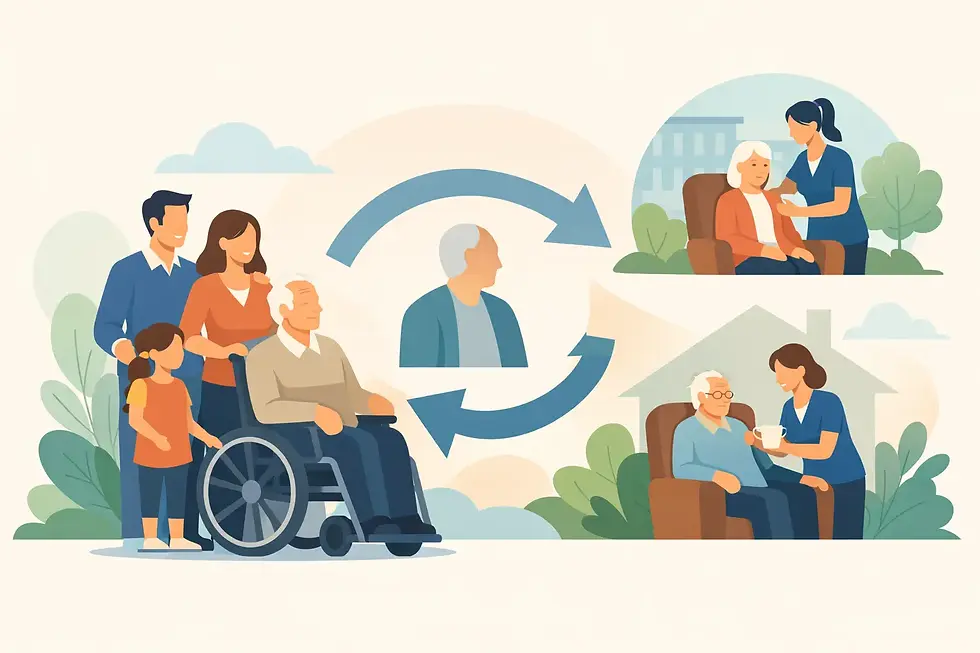
Short term senior care after hospital stay is temporary support designed to help an older adult recover safely before returning to their usual routine or transitioning into a longer-term care plan if needed. The length of stay varies. Some seniors need only a couple of weeks of close oversight, while others need a month or more to regain strength, confidence, and stability.
This kind of care is most helpful when home is not the safest immediate option. That may be because your loved one lives alone, has mobility limitations, needs medication supervision, has early memory loss, or simply needs more support than family can realistically provide around the clock.
In a high-quality setting, short-term care is not just about having a place to stay. It should include personalized assistance with daily living, consistent wellness oversight, nutritious meals, medication management, and a calm environment that supports healing. For families, it also provides something just as valuable - relief from constant uncertainty.
Why the days after discharge matter so much
The first few days after a hospital stay are often the most fragile. New prescriptions may have been added. Old medications may have changed. Energy levels are lower, appetite can be poor, and confusion is not uncommon, especially after anesthesia, infection, or dehydration.
This is also when fall risk tends to rise. A senior may feel determined to resume normal activities before their body is ready. They may get up too quickly, forget to use a walker, or try to manage stairs alone. Even very capable older adults can overestimate what they can safely do during recovery.
Short-term care helps create a safer landing. Instead of returning to an empty house or relying on scattered family visits, your loved one has structured support throughout the day and night. That supervision can reduce the chance of readmission and help recovery stay on track.
Who benefits most from short term senior care after hospital stay
Not every discharge requires this level of support, but many do. Seniors recovering from joint replacement, stroke, pneumonia, urinary tract infections, falls, heart-related events, or general deconditioning often benefit from extra care for a period of time.
It can also be the right fit for someone with mild cognitive impairment or early dementia. Even if the hospital issue was temporary, memory challenges can make recovery far more complicated. Missed medications, poor hydration, wandering at night, or forgetting mobility precautions can all interfere with healing.
Family caregivers benefit too. When a spouse is exhausted or adult children are juggling work, children, and a loved one's discharge instructions, the pressure can become intense very quickly. Temporary care gives everyone room to focus on recovery rather than operating in crisis mode.
What to look for in a recovery-focused care setting
The right environment matters. A large, busy facility may work for some seniors, but others recover better in a quieter, more personal setting with close attention and fewer moving parts. This is especially true for seniors who are easily confused, anxious, or at increased fall risk.
Look for care that includes 24/7 supervision, help with bathing and dressing, medication administration, mobility support, and regular observation for subtle changes in condition. Recovery can shift quickly. A caregiver who notices swelling, weakness, poor intake, confusion, or unusual fatigue early can help address a problem before it becomes an emergency.
It also helps to ask how personalized the care really is. Does the team understand the discharge plan? Are meals adapted to dietary needs? Is the environment set up to support safe walking and transfers? Is there meaningful communication with family? These details often shape whether a short stay feels reassuring or stressful.
A residential care home can be especially appealing when families want comfort without giving up clinical awareness. In a boutique environment, care tends to feel more personal, and routines can be adjusted more easily around the resident rather than the other way around.
The care details families often overlook
When families are moving quickly after a discharge, they understandably focus on the basics: a room, help with medications, and someone available to assist. But the smaller details often affect recovery just as much.
Hydration is one example. Many seniors leave the hospital already somewhat depleted, and low fluid intake can worsen weakness, dizziness, and confusion. Nutrition is another. If meals are inconsistent or unappealing, healing can slow down. Sleep also matters. A calm, home-like setting may support better rest than a noisy or overly stimulating environment.
Then there is dignity. Recovery is physically vulnerable and emotionally difficult. Seniors often feel frustrated by needing help with toileting, bathing, or getting in and out of bed. Compassionate caregivers who provide support respectfully can protect confidence during a period when independence feels shaky.
How to decide whether home is enough right now
Many families ask the same question: can Mom or Dad just come home with a little extra help? Sometimes the answer is yes. But it depends on more than good intentions.
If your loved one needs assistance several times a day, has a complicated medication schedule, is unsteady when walking, becomes confused in the evening, or would be alone for long stretches, home may not be the safest immediate plan. A few hours of help is very different from true recovery oversight.
It also depends on the home itself. Stairs, narrow bathrooms, loose rugs, and distance from family support all matter. A discharge plan that looks manageable in theory can become risky by the second day.
Short-term care does not mean giving up on independence. In many cases, it protects it. A supported recovery period can help a senior regain strength and return home more safely than if they had gone back too soon.
Questions worth asking before you choose care
Before selecting a provider, ask how they handle post-hospital transitions. You want to know whether they can follow discharge instructions closely, monitor for changes in condition, and communicate clearly with family.
Ask who oversees care, how medications are managed, what level of nighttime support is available, and how mobility assistance is handled. If your loved one has memory concerns, ask how the setting reduces confusion and supports orientation. If fall prevention is a priority, ask what practical measures are in place each day.
Pricing transparency matters too. During a stressful transition, families deserve clear answers about what is included. Hidden add-on fees can turn a short stay into a financial and emotional strain.
For families in Cypress and nearby communities, Serenity Springs Senior Living is designed for exactly this kind of need, offering a more intimate residential setting with 24/7 nurse-supervised care, personalized support, and the kind of close oversight that helps recovery feel safer and less overwhelming.
When short-term care becomes a turning point
Sometimes a hospital stay reveals that a loved one needs more support than anyone realized. What begins as short term senior care after hospital stay can also give families clarity. You may see that your parent bounces back well and can return home with confidence. Or you may realize that ongoing help with medications, mobility, or memory care would improve daily life long term.
That is not a failure. It is useful information gathered at the right time, in a setting where safety comes first.
When families choose temporary care thoughtfully, they are not simply solving for the next week. They are giving a loved one the chance to recover with dignity, consistency, and real peace of mind. And after the stress of a hospital stay, that kind of support can feel like exactly what everyone needed.


Comments